Protect Your Money, Your Privacy and Bank Details
It feels like every other day we hear abouta scam, data breach, or a new way for our hard-earned money to be put at risk.
Last month my own credit card was illegally used, but this female financial coach, saw the signs and had protections in place.
Today more than ever, we need to be proactive about safeguarding our digital and financial lives. It’s not about being fearful; it’s about being proactive, savvy, and in control.
So, let’s talk about what’s out there and, more importantly, what you can do about it.
The Scammer’s Playbook
Scammers are getting more sophisticated, but their tactics often rely on a few key strategies. They might try to create a sense of urgency, impersonate a trusted organisation, or appeal to your emotions.
Here are some of the most common ways they’ll try to get to you, according to Scamwatch (a great government website resource):
•Phishing (and Smishing): These are the classic email and SMS scams that try to trick you into clicking a malicious link or revealing personal information. They might look like they’re from your bank, a government agency, or even a delivery service.
•Impersonation Scams: Scammers might call you pretending to be from the ATO, your bank, or even a tech support company, claiming there’s a problem with your account or computer.
•Investment Scams: These scams promise high returns with little to no risk. They often use professional-looking websites and documents to lure you in.
•Romance Scams: Scammers create fake profiles on dating apps and social media to build relationships with their victims, eventually asking for money for a fake emergency. There's even a Netflix show with real life cases!
10 Actionable Steps to Protect Yourself
Here’s 10 things you can do right now to strengthen your defences:
1. Power of the Pause: If you receive an unexpected email, text, or phone call asking for personal information or money, stop. Take a breath.
Scammers want you to act quickly without thinking. A simple pause can be your most powerful defence.
2. Verify, Verify, Verify: If you’re not sure if a communication is legitimate, contact the organisation directly using a phone number or website you know to be genuine. Don’t use the contact details provided in the suspicious message.
3. Level Up Your Passwords: Are you still using the same password for multiple accounts? No shame, I was a bit guilty of that years ago.
It’s time for an upgrade. Use a password manager to create and store unique, complex passwords for each of your online accounts. Think of it as giving every gate to your fortress a different key.
4. Multi-Factor Authentication: a non-negotiable. MFA adds an extra layer of security by requiring a second form of verification (like a code sent to your phone) when you log in. Fortunately many institutions are requiring these now.
5. Privacy Audit: Take a look at the privacy settings on your social media accounts. Are you sharing more information than you need to? Be mindful of what you post online, as scammers can use this information to build a profile on you.
6. Tech Check: Make sure your computer, phone, and other devices have the latest software updates. These updates often include critical security patches that protect you from the latest threats.
7. Public Wi-Fi: Public Wi-Fi can be a lifesaver, but it’s not always secure. Avoid doing any online banking or entering sensitive information when you’re connected to a public network.
8. Shred it: Don’t just throw away old bank statements, credit card offers, or other documents with personalinformation. Shred them first. It’s the physical equivalent of deleting yourdigital footprint.
9. Monitor Your Accounts: Make it a habit to regularly check your bank and credit card statements for any suspicious activity. If you see something you don’t recognise, report it to your bank immediately.
And hey, you should be reviewing your bank transactions at least monthly anyway – it helps keep you mindful about your spending!
10.Trust Your Gut: If something feels off, it probably is. Don’t be afraid to hang up the phone, delete the email, or e-walkway from a situation that doesn’t feel right. Your intuition (or Spidey-sense) is a powerful tool.
Protecting your privacy and banking details isn’t about living in fear. It’s about empowering yourself by taking proactive steps to stay safe.
By building these simple habits into you rroutine, you can create a financial fortress that is strong, secure, and ready for whatever comes your way.
If you ever have any questions or concerns, reach out. I’m here to help you navigate the financial world with confidence and peace of mind.
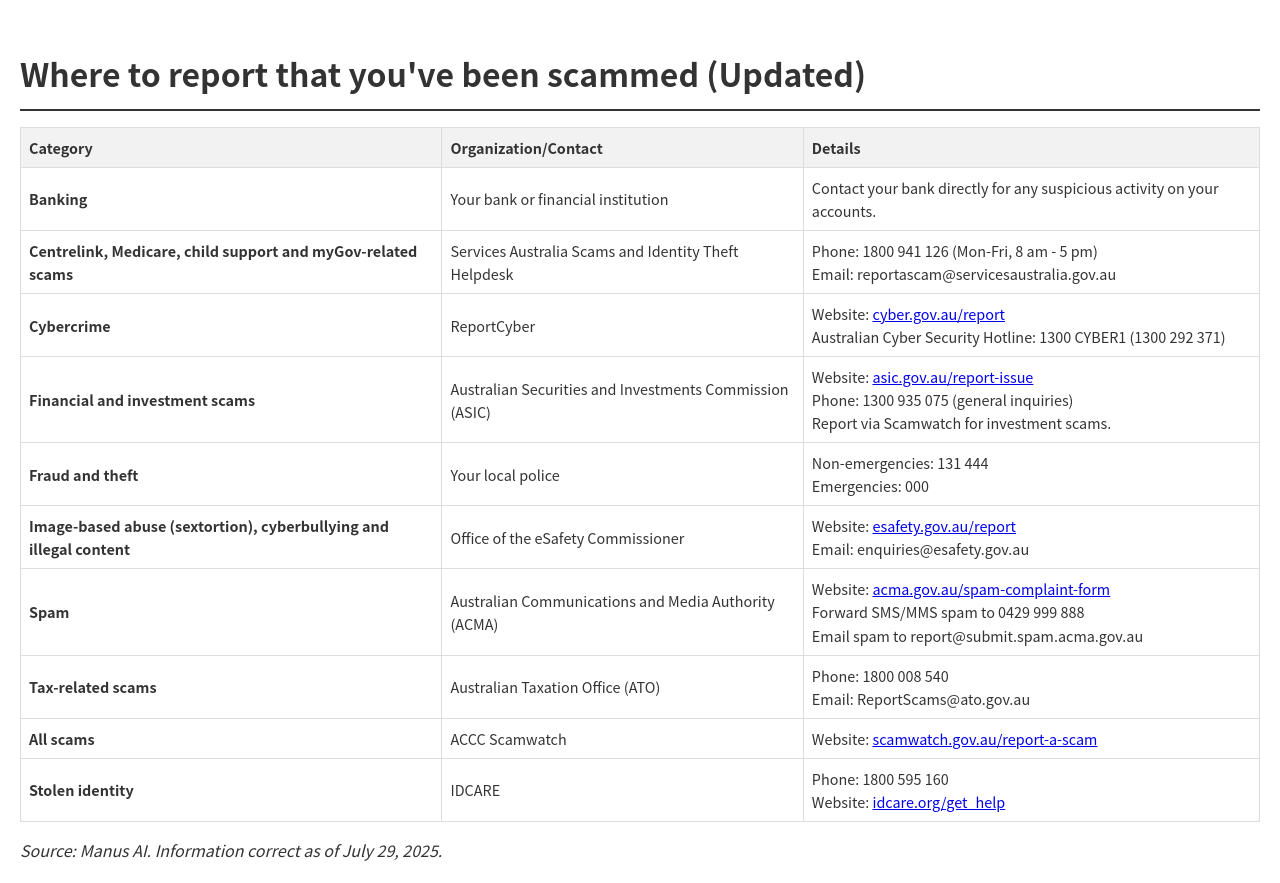
For more information and to report a scam, visit Scamwatch.gov.au. I've also got a handy sheet below of organisations that can assist you.
Warmest,


